The villa
The house on Bà Triệu
Three things worth knowing before you arrive: what the house is, what is on its walls, and how you get in.
The house
196 Bà Triệu was built in the 1930s, when this part of Hai Bà Trưng was laid out in the French manner: wide pavements, plane trees, houses set back a little from the road. The proportions of that period survived — ceilings high enough that the windows have room to be tall, and shutters that still close against the afternoon heat.
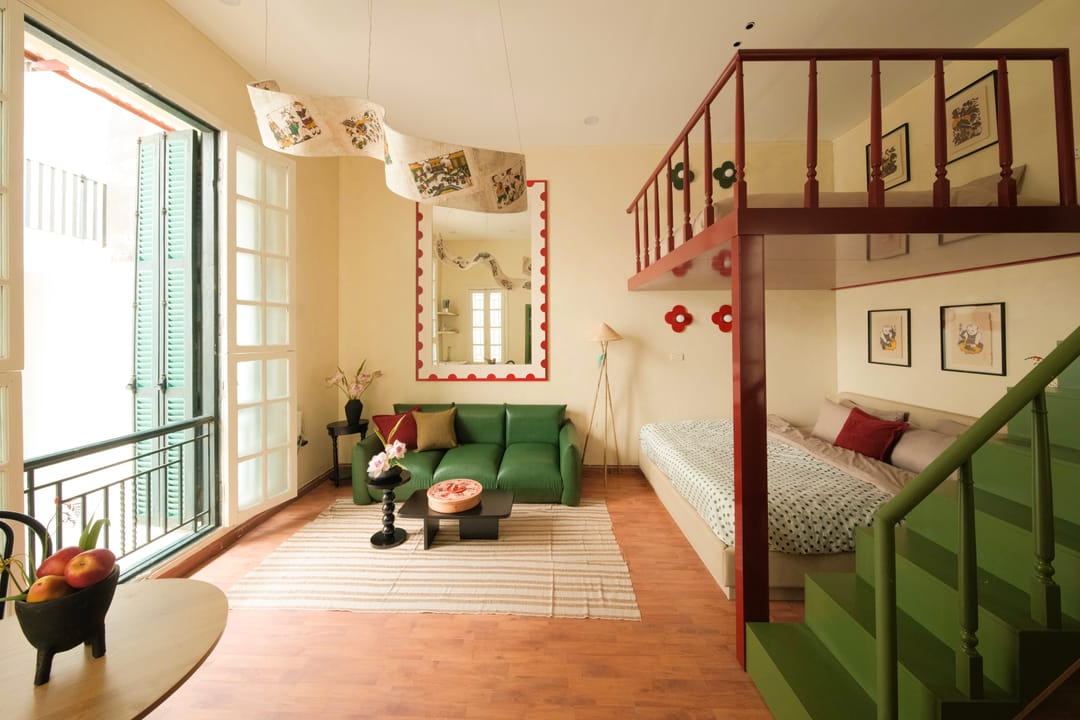
What was done to it recently was mostly subtraction. Partitions came out, the plaster was lime-washed back to a soft ivory, the stair railings were painted mint, and four self-contained studios were fitted into the volumes that were left. There is no lift; there are two flights of stairs, and a landing on each floor with a window.
The interiors
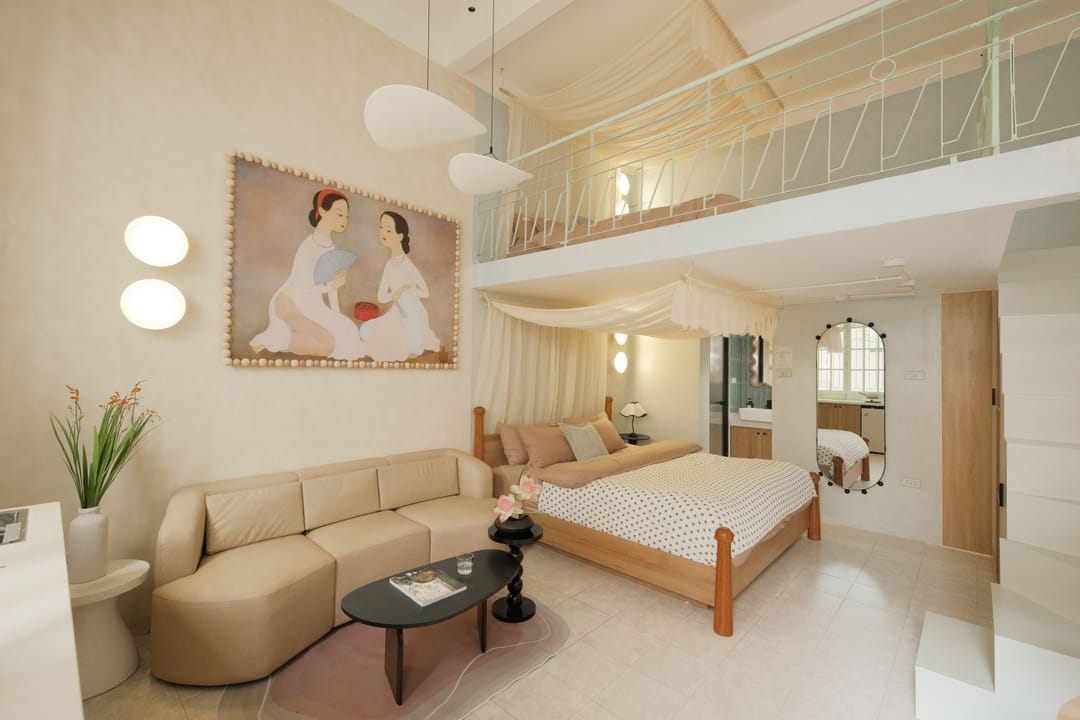
Each studio takes a colour and stays with it — green, cream, terracotta, red and yellow. Against that, the decoration is Vietnamese and specific: Hàng Trống woodblock prints, paintings of women in áo dài, a lamp built from a nón lá, lacquer boxes and trays that get used rather than displayed.
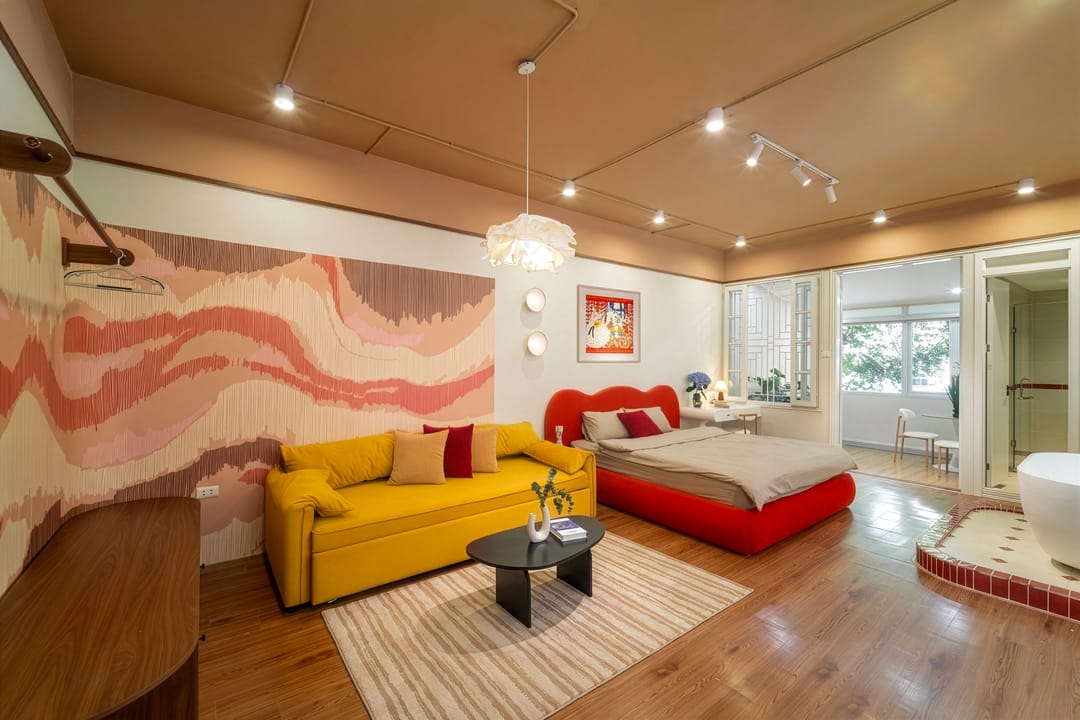
The furniture is a mix on purpose. A green leather sofa under a red scalloped mirror in 1A; a muslin canopy over the bed in 2A; clouds painted across the ceiling in 3A; a coral wave running the length of a wall in 4A. Two studios have a freestanding bath standing in the room by the window, which is the single detail guests photograph most.
Your stay
Check-in is by keybox, so it works at any hour — we send the code and a short set of directions the day before you arrive. Late arrivals are fine with prior notice; check-in runs from 14:00 to 23:00, and after that we just need to know. Luggage can be left before check-in and after check-out.
Breakfast is instant noodles, tea and coffee, kept stocked in your kitchen. The washer and dryer on the ground floor are free and unmetered. Fresh towels and toiletries are included, and each studio door has its own lock.